
Do Gutter Guards Really Prevent Clogged Gutters?
What Bergen County Homeowners Should Know About Gutter Protection, Drainage, and Maintenance
Quick answer: Gutter guards can reduce the leaves, petals, twigs, and other debris that enter a gutter. They do not make a gutter system maintenance-free. Debris can still collect on top of the guards, so occasional clearing and inspection may still be needed to keep rainwater flowing properly.
In Bergen County's tree-lined neighborhoods, gutters deal with more than fall leaves. Spring flower petals, seed pods, pine needles, small twigs, and shingle granules can all collect around a home's drainage system.
At Mattsson Roofing, we look at gutters as part of the complete roofing system. Rainwater should move off the roof, into the gutters, through the downspouts, and away from the home. Gutter protection can support that process, but it cannot correct poor gutter design, improper pitch, blocked downspouts, or neglected maintenance.
Why Debris on Top of Gutter Guards Is Not Always a Problem
During a spring inspection of a Glen Rock home where Mattsson Roofing had completed roofing work approximately two years earlier, pink flower petals had collected on top of the gutter protection system.
At first glance, that buildup could look like a problem. In fact, it illustrated what gutter protection is intended to do: keep a significant amount of debris out of the gutter channel.
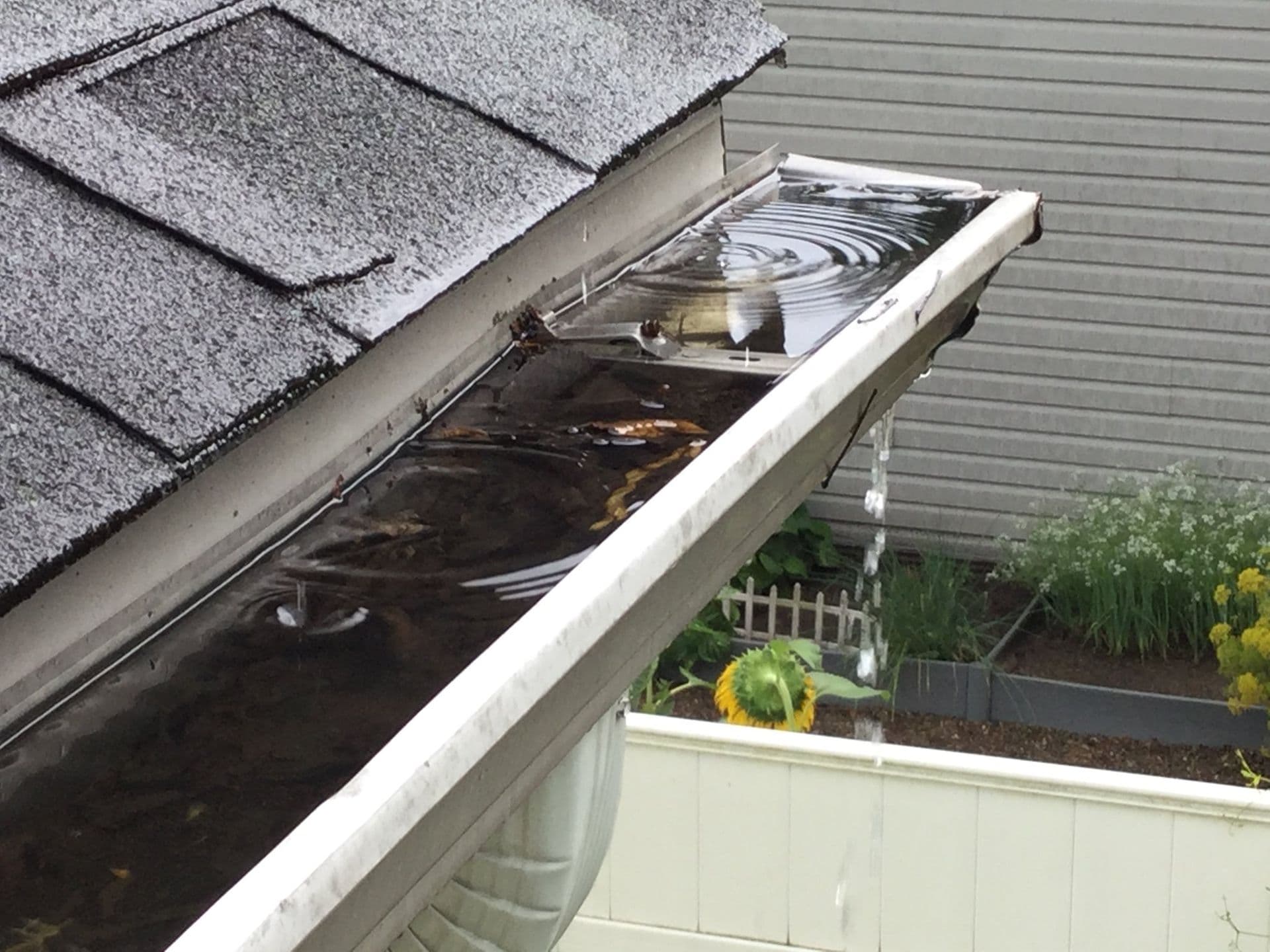
Without protection, petals and similar material may enter the gutter, collect near an outlet, and restrict the flow of water toward the downspout. When debris remains on top of a cover instead, the gutter channel may remain clearer and water can continue moving through the drainage system.
That does not mean every accumulation on a gutter cover can be ignored. Heavy buildup can cover openings or interfere with water entering the gutter, particularly during a heavy rainstorm. Periodic clearing may still be necessary.
Gutter protection does not stop debris from landing on the system. Its purpose is to reduce debris inside the gutter, where it can interfere with drainage.
How Gutter Guards Work
Gutter guards are designed to limit the debris entering a gutter while allowing rainwater to pass through. Systems vary, but common designs include:
Mesh screens, which use fine openings to block larger debris
Perforated covers, which use holes or slots to admit water
Surface-tension covers, which guide water into the gutter while helping leaves remain outside the channel
No design performs identically on every home. Results depend on the roof pitch, gutter size, surrounding trees, the type of debris, rainfall intensity, and installation quality.
For example, a Glen Rock home beneath a large maple may face a different maintenance pattern than a Bergen County home surrounded by pine trees. Pine needles and small seed pods can be more challenging for certain guard designs than broad leaves.
Do Gutter Guards Still Need Cleaning?
Yes. Gutter guards may reduce the frequency of cleaning, but they do not eliminate the need for inspection or maintenance.
Leaves, petals, pine needles, and other debris can collect on the surface of the protection system. Depending on the amount and type of buildup, a homeowner may need to gently clear the surface, check the gutter outlets, or make sure downspouts remain unobstructed.
Homes near mature trees often need more attention during spring and fall. After a major storm, it is also wise to look for signs of drainage problems, including:
Water spilling over the front or back of the gutter
Standing water that does not move toward an outlet
Heavy debris resting on gutter covers
Loose, sagging, or separating gutter sections
Downspouts that appear blocked, disconnected, or poorly routed
Water collecting near the foundation
Only inspect or clean elevated gutters when it can be done safely. When in doubt, contact a qualified professional.
What Happens When Gutters Cannot Drain Properly?
When a gutter system cannot carry water away efficiently, the effects can extend beyond the gutter itself.
Water Overflow
Water may spill over the gutter edge or flow behind the gutter, depending on the cause and location of the drainage problem.
Fascia and Exterior Damage
Repeated exposure to overflowing water can contribute to deterioration of fascia boards, trim, siding, and other exterior materials.
Water Near the Foundation
Overflowing gutters or improperly routed downspouts can release water too close to the home, contributing to drainage and moisture concerns near the foundation.
Landscape Erosion
Concentrated runoff can wash away mulch, soil, and landscaping below the roofline.
Not every overflow is caused by debris. Improper gutter pitch, undersized gutters, poorly positioned outlets, and blocked downspouts can produce similar symptoms. A proper inspection should identify the cause before a solution is recommended.
When Do Gutter Guards Make Sense?
Gutter guards may be especially useful for homes surrounded by mature trees or homes where gutter channels clog repeatedly. Before adding protection, homeowners should consider:
The amount and type of nearby tree debris
How often the gutters clog or overflow
The size and condition of the existing gutters
Whether gutters slope correctly toward their outlets
Whether the downspouts drain freely and direct water away from the home
The ongoing maintenance needs of the selected protection system
A gutter guard cannot fix an undersized, improperly pitched, loose, or deteriorating gutter system.
Proper drainage comes first. Gutter protection comes second.
Can Larger Gutters and Downspouts Help?
They can. Correctly sized gutters and downspouts may improve a home's ability to manage water during heavy rainfall.
Many older homes still have traditional 5-inch gutters. At Mattsson Roofing, we typically recommend 6-inch K-style gutters paired with larger 3-by-4-inch downspouts when upgrading a home's gutter system. The larger gutters provide additional capacity to collect rainwater, while the larger downspouts help move that water away from the roofline more efficiently, especially during heavy rainfall. However, proper gutter pitch, downspout placement, and routine maintenance are still essential to preventing clogs and overflow.
Pitch, outlet placement, downspout routing, and maintenance all contribute to performance. Gutter protection and properly sized components work best when the entire drainage system is functioning as intended.
Do Gutter Guards Prevent Ice Dams?
No. Gutter guards are not designed to prevent ice dams.
Ice dams can develop when snow melts on a warmer area of the roof and refreezes near a colder roof edge. Conditions that may contribute include attic air leakage, insufficient insulation, inadequate ventilation, roof geometry, snow accumulation, and outdoor temperatures.
Where appropriate, balanced attic ventilation can help manage attic temperatures. However, ventilation alone is not a guaranteed ice-dam solution. Homes with recurring ice dams should have the roof and attic evaluated together to identify the conditions contributing to the problem.
Should Gutters Be Evaluated During a Roof Replacement?
Yes. A roof replacement is a practical time to evaluate gutters, downspouts, roof-edge details, and overall drainage. It does not automatically mean the gutters need replacement.
Gutters in good condition that are properly sized, securely attached, and correctly pitched may continue to serve the home well. Gutters that are damaged, undersized, deteriorating, or frequently overflowing may warrant improvement. Coordinating roofing and gutter work can also reduce duplicated labor in some projects.
Frequently Asked Questions
Do Gutter Guards Eliminate Gutter Cleaning?
No. They can reduce debris inside the gutter, but material may still collect on top of the guards and outlets or downspouts can still require attention.
Is Debris on Top of Gutter Guards Normal?
It can be. Many systems are designed to keep larger debris outside the gutter channel. Heavy buildup should still be removed if it restricts water entry.
Can Gutter Guards Cause Gutters to Overflow?
Debris on top of a guard can contribute to overflow if it restricts water entry. However, overflow can also result from poor pitch, undersized components, or blocked downspouts.
Do Gutter Guards Work With Pine Needles?
They may reduce the amount of pine debris entering a gutter, but pine needles can be challenging for some designs. Homes with heavy pine cover may need more frequent inspection.
Protecting Your Home Starts With Proper Drainage
Gutter protection can help manage debris, but it does not replace properly designed gutters, clear downspouts, and routine maintenance. The most important question is whether rainwater can enter the gutter, travel through the system, and discharge safely away from the home.
For Bergen County homeowners, the goal is simple: keep water moving efficiently off the roof and away from the home.
Overflowing gutters or planning a roof replacement? Mattsson Roofing can evaluate your roofing system, gutters, and drainage needs. Call (201) 925-9709 or Click Here to request an estimate.
SCIENCE & BEAUTY in Roofing
Contact Us

Mon-Fri: 7:30am - 5pm
Sat: Appointment Only
Sun: Closed