
Case Study: How We Redesigned the Ventilation System on a Glen Rock Roof During Construction
Project Location: Glen Rock, NJ
Services: Roof Replacement • Attic Ventilation Design • Skylight Installation
TL;DR
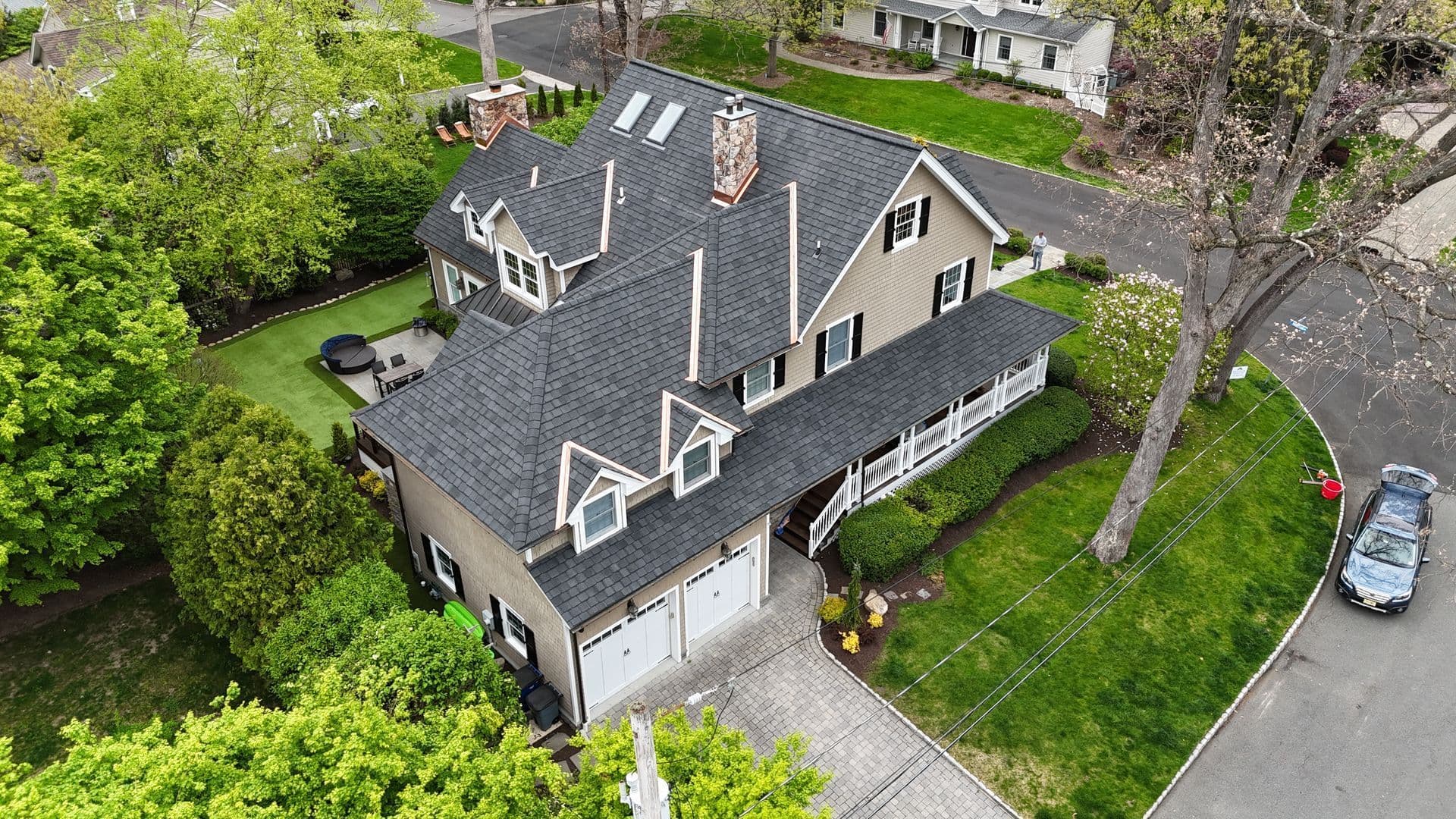
A roof should not be failing after only seven years. On this Glen Rock home, the shingles weren't the problem. Restricted attic intake ventilation, a roof plane measuring more than 30 feet from eave to ridge, and inadequate ice and water shield coverage created the conditions for ice dams, trapped moisture, and severe roof decking rot. Mattsson Roofing redesigned the ventilation system, rebuilt the compromised structure, and installed a complete Atlas roofing system engineered specifically for this home's architecture.
A Roof Shouldn't Fail After Seven Years
When the homeowner told us their roof was approximately seven years old, we expected to remove worn shingles and install a new roofing system.
What we discovered underneath told a very different story.
As our crew removed the existing roof, sections of the roof decking were so saturated that they could no longer support weight. During the tear-off, Erik Mattsson stepped onto one section of the deck and his foot broke through the wood. This wasn't isolated damage. It was widespread deterioration caused by years of trapped moisture beneath what appeared to be a relatively young roof.
The shingles themselves were never the primary problem.
The roof had been ventilated incorrectly from the day it was installed.
What followed wasn't simply a roof replacement. It became a complete redesign of the home's ventilation system.
What We Found During Tear-Off
Every roof tells a story once it's opened.
This one told us exactly why it had failed.
The roof decking above the eaves was dark, stained, saturated, and severely deteriorated. The damage followed a consistent pattern rather than random isolated areas. That pattern immediately suggested moisture intrusion over many seasons rather than a single leak.
As the roof was removed, three major issues became clear.
First, the attic wasn't receiving enough intake ventilation.
Second, one side of the roof measured more than 30 feet from the eave to the ridge, creating an unusually long airflow path.
Third, the existing waterproofing stopped well below the area where ice dams had repeatedly forced water beneath the shingles.
Individually, each issue reduces roof performance.
Combined, they created the perfect conditions for premature failure.
Why This Roof Failed
Roof failures rarely happen because of one mistake.
They happen because several smaller problems work together until the roofing system can no longer protect the home.
Chain of failure:
Semi-vented soffits → Restricted attic intake → 30+ foot roof plane → Insufficient airflow → Trapped heat and moisture → Snow melts from underneath → Ice dams form → Water backs up beneath shingles → Ice & water shield ends → Roof decking remains wet → Premature decking rot.
The shingles didn't cause this roof to fail.
The ventilation system did.
Why Intake Ventilation Matters
Many homeowners assume ridge vents do all the work.
They don't.
A ridge vent can only exhaust the amount of air that enters through the soffits.
This home had semi-vented soffits. Although technically ventilated, the attic never received enough intake air to support balanced airflow.
The 30-Foot Problem
One roof plane measured more than thirty feet from the eave to the ridge. That unusually long airflow path meant the upper attic remained under-ventilated even if the lower portion received fresh air.
Good roofing begins with understanding how the house works, not simply installing products.
How Ice Dams Destroy Roof Decking
Poor attic ventilation traps heat beneath the roof deck. That heat melts snow from below, water refreezes at the cold eaves, an ice dam forms, and backed-up water eventually reaches the decking.
One Course Wasn't Enough
The previous roof contained one course of ice and water shield. The material performed exactly as designed within its coverage area—but repeated ice damming pushed water beyond the membrane.
Mattsson Roofing installed two courses of Atlas WeatherMaster 200 Ice & Water Shield, providing approximately six feet of protection.
Why the Decking Had to Be Replaced
Roofing systems depend on solid decking. Saturated wood cannot securely hold fasteners, making replacement essential whenever structural integrity is compromised.
Redesigning the Ventilation System
The semi-vented soffits were replaced with T4 fully vented soffits.
Because one roof plane exceeded 30 feet, a DCI SmartVent supplemental intake vent was
installed midway up the roof to shorten the airflow path and improve upper-attic ventilation.
Why We Didn't Install a Powered Attic Fan
Mattsson Roofing does not combine competing exhaust systems. This roof needed improved intake, not additional exhaust.
The New Roofing System
Roofing:
· Atlas Pinnacle Pristine Architectural Shingles
(Black Shadow)
· Atlas Summit 60 Synthetic Underlayment
· Atlas WeatherMaster 200 Ice & Water Shield
(2 courses)
· Atlas Pro-Cut HP42 Starter
· Atlas Pro-Cut Hip & Ridge
Ventilation:
· Atlas TruRidge Ridge Vent
· T4 Fully Vented Soffits
· DCI SmartVent Supplemental Intake
Additional:
· New VELUX Fixed Skylight
· New Pipe Flashings
· Broan Roof Vent
· Aluminum Drip Edge
· Replacement of compromised decking
Lessons Every Homeowner Can Take Away
Ask your roofing contractor:
· How did you determine the amount of intake ventilation?
· How many courses of ice & water shield are required—and why?
· Does my roof geometry require a custom ventilation strategy?
· Will my decking safely support a new roof?
Science & Beauty in Roofing
Every roof deserves more than new shingles.
It deserves the right solution.
Contact Us
Mon-Fri: 7:30am - 5pm
Sat: Appointment Only
Sun: Closed