
How Do Ridge Vents and Soffit Vents Protect Your Roof?
A roof replacement isn’t just about new shingles.
It’s about how heat, air, and moisture move through your home over time. One of the most important—but often misunderstood—parts of a roofing system is attic ventilation.
At Mattsson Roofing, we recently completed a roof replacement in Bergen County that included installing a continuous ridge vent and fully vented soffits. The result was a home that could finally breathe the way it was meant to—naturally, consistently, and without mechanical systems.
This article explains how ridge vents and soffit vents work together, why they matter, and how proper ventilation protects both your roof and your comfort for the long term.
Why Attic Heat Is a Problem in Bergen County Homes
Many homes across Bergen County—especially in towns like Glen Rock, Ridgewood, Wyckoff, and Fair Lawn—were built before modern ventilation standards were common.
When heat gets trapped in the attic:
- Temperatures can rise far above outdoor levels
- Shingles bake from underneath
- Moisture has nowhere to escape
- Living spaces below feel warmer and harder to cool
These issues don’t usually cause immediate damage. Instead,
they shorten the life of the roof and increase energy strain year after year.
According to Mattsson Roofing’s inspection process, poor attic ventilation is one of the most common hidden contributors to premature roof aging in Bergen County.
What a Ridge Vent Does and Where It’s Installed
A ridge vent is a continuous vent installed along the peak of the roof—the highest point where hot air naturally rises.
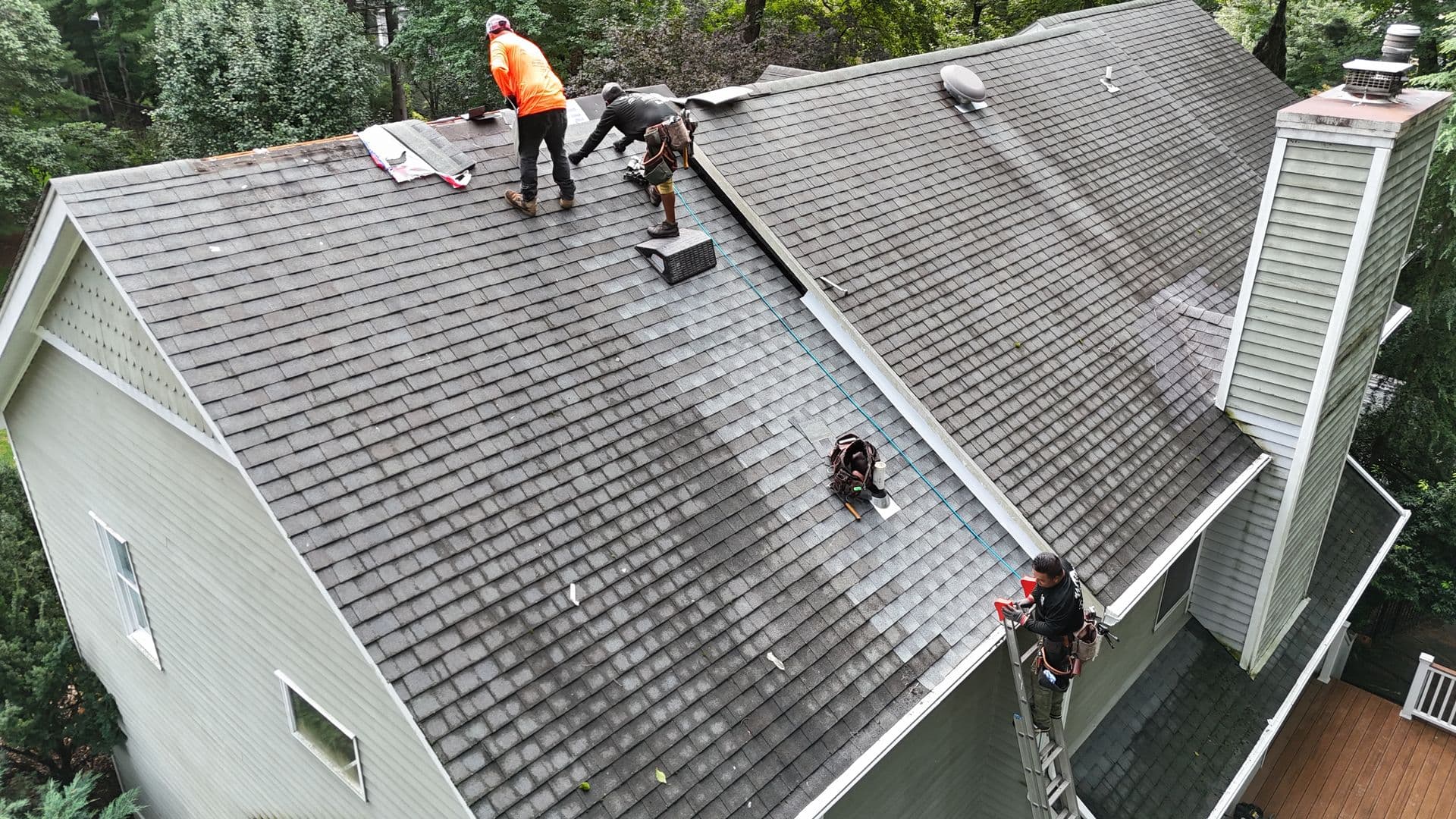
During this roof replacement, the installation required cutting an opening along the ridge of the roof to allow hot attic air to
escape. As explained during the project:
“We had to cut a 3-inch gap underneath this at the apex of the roof… the peak of the roof is now open, and that allows hot air to exhaust out of the attic.”
Once the opening is created, the ridge vent is installed over it, allowing air to escape while keeping rain, snow, and debris out.
How Ridge Ventilation Actually Works
Heat naturally rises. A ridge vent uses that principle to ventilate the attic without fans or motors.
With a properly installed ridge vent:
- Hot air collects near the peak of the attic
- That heat exhausts along the entire ridge
- Air can escape evenly instead of building up in one area
As described on site:
“That hot air bleeds out to the sides of this ridge vent…now this house is going to be able to exhaust all of the hot air that gets
contained in the attic.”
This helps regulate attic temperature and reduces stress on the roofing system below.
Why Soffit Vents Are Essential to the System
A ridge vent can only work properly if it has a steady source of incoming air. That’s where soffit vents come in.
Soffits are located at the eaves—the lower edges of the roof. When they are fully vented, they allow cooler exterior air to enter the
attic.
In this project, fully vented soffits were installed on both sides of the home.
The airflow path works like this:
- Cooler air enters through the soffits
- Air moves upward through the attic
- Hot air exits through the ridge vent
As explained during the installation:
“Cooler air from the exterior is gonna get in at the soffits… it’s gonna churn up through the attic, and then it’s gonna exhaust out
this ridge vent.”
This continuous movement is called natural ventilation.
What “Natural Ventilation” Means for Your Home
Natural ventilation is a passive system. Once installed correctly, it works for as long as the roof is on the home.
That matters because:
- There are no mechanical parts to fail
- No electricity is required
- Performance is consistent year after year
As explained during the project:
“You don’t need anything mechanical. You just cut the ridge, you open up the soffits, and then your roof can now breathe for as long as it’s on your home.”
For many Bergen County homes, this is the most reliable and low-maintenance ventilation solution available.
How Proper Ventilation Extends Roof Lifespan
Ventilation directly affects how long your roof lasts.
When heat and moisture are allowed to escape:
- Roof decking stays drier
- Shingles experience less thermal stress
- Materials age more evenly
As noted during the installation:
“That’s great for your roof’s lifespan. That’s gonna preserve the decking underneath the shingles. That’s gonna preserve the
shingles as well.”
Over time, this means fewer repairs, fewer surprises, and a roof that maintains its appearance longer.
Common Ventilation Mistakes Homeowners Don’t Realize
Many homeowners assume that having vents automatically means proper ventilation.
In reality, inspections often reveal:
- Ridge vents installed without enough soffit intake
- Soffits that are blocked internally
- Mixed ventilation systems working against each other
- Mechanical fans added without correcting airflow balance
A trusted roofer in Ridgewood or anywhere in Bergen County should evaluate ventilation as a complete system, not as isolated
components.
Mechanical Fans vs. Natural Ventilation
Mechanical attic fans can have their place, but they are often installed to compensate for poor design rather than correct it.
Natural ridge-and-soffit ventilation offers key advantages:
- No moving parts
- No risk of pulling conditioned air from the home
- Long-term reliability
- No operating cost
For many homes in Upper Saddle River, Franklin Lakes, and Ramsey, natural ventilation provides better performance with fewer long-term issues.
Real Results Homeowners Notice
One of the clearest signs of proper ventilation is how quickly homeowners feel the difference.
In this case:
- The attic temperature stabilized
- Interior comfort improved
- The homeowner noticed results almost immediately
That’s common after correcting ventilation on a roof replacement in Wyckoff or Saddle Brook, especially in homes that previously trapped heat.
Ventilation as Part of a Complete Roofing System
At Mattsson Roofing, ventilation is never treated as an
add-on. It’s evaluated alongside:
- Flashing details
- Drainage paths
- Roof design and slope
- Attic conditions
According to Mattsson Roofing’s inspection process, roofing works best when every component supports the others.
Schedule Your Roofing Inspection Today
For homeowners in Bergen County looking for peace of mind with their roof, Mattsson Roofing is here to help. Our inspections focus on understanding the entire roofing system—not just spotting surface issues.
Schedule --> Schedule Here
Contact Us
Mon-Fri: 7:30am - 5pm
Sat: Appointment Only
Sun: Closed