
What Happens When a Bathroom Fan
Vents Into Your Attic?
The Hidden Dangers
A bathroom exhaust fan should always vent outside your home. When it vents into the attic instead, the moisture it carries can lead to mold, damaged insulation, wood rot, and even roof deck failure. It’s one of the most common hidden ventilation issues we find during roof inspections in Bergen County.
It’s a scenario we see time and again in beautiful homes from Ho-Ho-Kus to Franklin Lakes. A homeowner might notice a musty smell in an upstairs bedroom, see discoloration on a ceiling, or feel a damp chill in the air, never suspecting that the true culprit is hiding in the attic. The
bathroom exhaust fan, a device designed to protect your home from moisture, can
become a primary source of damage when it isn’t installed correctly.
Why Is It a Problem When a Bathroom Fan Vents Into the Attic?
When you take a hot shower, all the resulting steam and moisture needs a safe escape route.
That’s the job of your bathroom exhaust fan. It pulls the humid air from the bathroom and is supposed to direct it through a duct, venting it safely to the exterior of your home. However, a surprisingly common and damaging mistake is when this ductwork is either improperly installed, becomes disconnected, or was never vented to the outside in the first place.
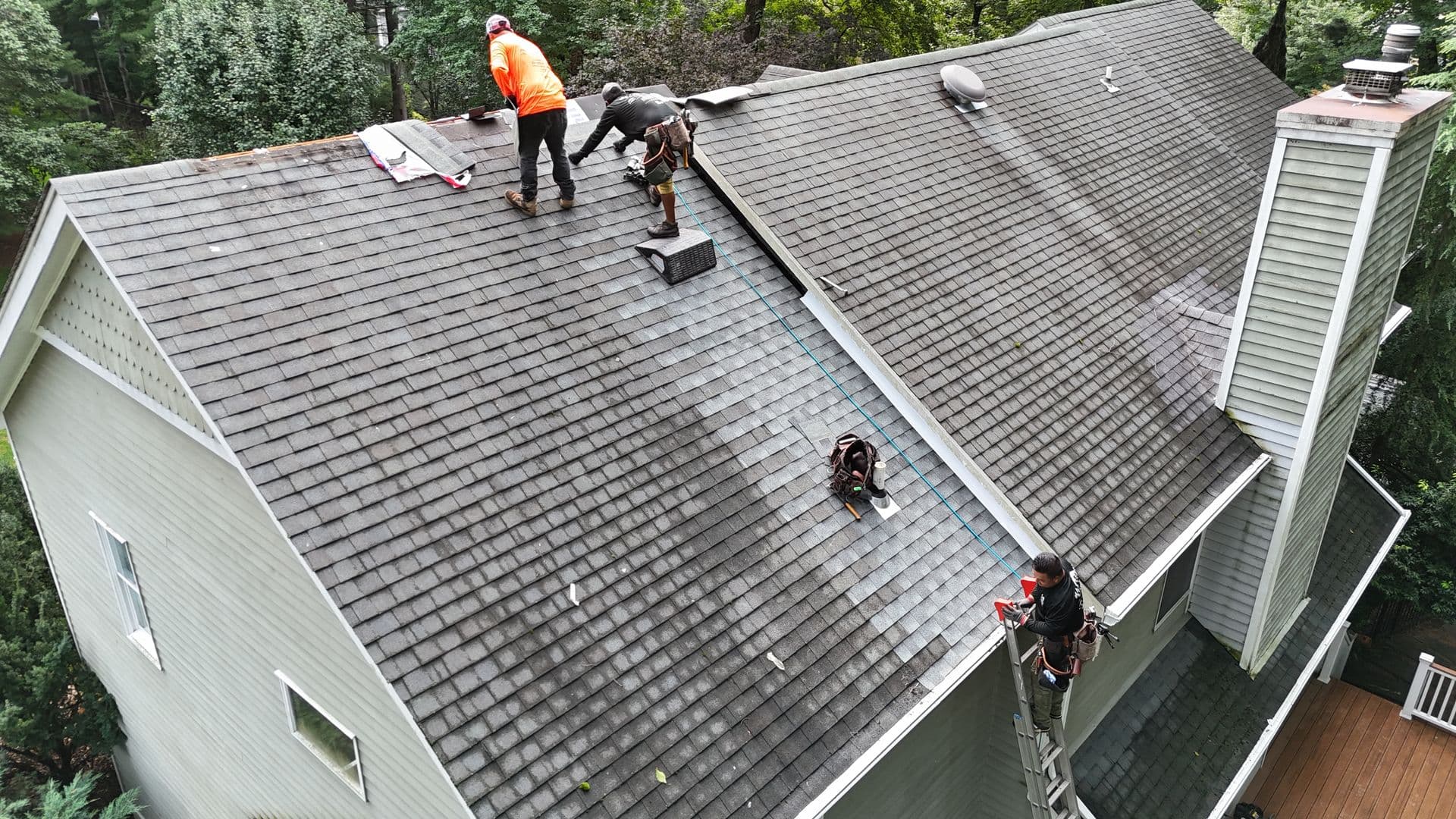
As our own Erik Mattsson recently explained while inspecting a home in Ridgewood, this creates
a serious problem.
“This duct is now exhausting and taking all of that moisture that it gathers from the bathroom down below and it’s dumping it into the attic,” he noted.
Instead of being removed from the home, all that warm, moist air is released directly into the attic space. This is a frequent issue we uncover during roof inspections in older homes throughout towns like Glen Rock and Wyckoff, where building practices or subsequent repairs may not have met modern
standards.
This isn’t just a minor inconvenience; it’s an open invitation for significant, long-term damage
to your home’s structural integrity and your family’s health.
What Happens to Moisture Inside an Attic?
The attic is one of the most critical—and vulnerable—areas of your home. It plays a huge role in your home’s overall ventilation, insulation, and structural stability. Introducing a consistent source of
moisture into this environment can set off a destructive chain reaction.
Erik Mattsson puts it perfectly:
“When you’re bringing moisture into an attic where there was already ventilation problems, excessive moisture, mildew, a little bit of mold, that’s only going to compound and add to those problems.”
For homeowners in places like Upper Saddle River or Saddle Brook, where weather can range from humid summers to icy winters, an attic with moisture problems is a ticking time bomb.
That moisture buildup can lead to:
- Mold growth
- Mildew growth
- Wood rot
- Wet insulation
- Rusted fasteners
- Condensation staining
- Ice dam formation
Can Bathroom Fan Moisture Cause Mold in the Attic?
Your attic's wood framing, insulation, and stored belongings are the perfect food source for mold
and mildew. When you add the moisture from an improperly vented bathroom fan, you create an ideal breeding ground. Mold isn't just an unsightly nuisance; it can release spores into the air that circulate throughout your home, potentially causing respiratory issues, allergies, and other health problems for your family.
Can It Damage Roof Decking?
Absolutely.
Roof decking is one of the most important structural parts of your roofing system. It supports the shingles and helps hold the entire roof together.
When moisture repeatedly collects on the underside of the decking, the wood can begin to weaken.
Over time, this can cause:
- Soft decking
- Delamination
- Rotting wood
- Nail pops
- Structural weakening
At that point, what could have been a small ventilation repair may turn into a larger roofing repair.
In some cases, the decking may need to be replaced.
Can Wet Insulation Affect Energy Efficiency?
Insulation works by trapping air, but when it becomes saturated with moisture, it compresses and
loses its effectiveness. Damp insulation can no longer properly regulate the temperature in your home. This leads to higher energy bills as your HVAC system works overtime to compensate for the heat loss in the winter and heat gain in the summer. Homeowners in Ramsey and Hillsdale looking to keep their energy costs down should be particularly mindful of their attic's health.
Can This Cause Ice Dams?
It can.
Ice dams often begin with attic heat.
When warm, moist air raises attic temperatures, it can warm the underside of the roof and start melting snow unevenly.
That melted snow travels down the roof and refreezes at the colder eaves.
This creates an ice dam.
Ice dams trap water and force it backward under shingles, creating interior leaks and water damage.
We see this often in towns like Glen Rock, Ridgewood, and Wyckoff during the winter.
The Mattsson Solution: Expert Diagnosis and Lasting Repairs
Discovering that your bathroom fan is venting into your attic can be alarming, but the good news
is that there is a clear, effective solution. This isn’t a job for a quick, temporary patch. It requires a professional understanding of your home’s entire roofing and ventilation system to ensure the problem is fixed correctly for the long term.
At Mattsson Roofing, our approach is calm, educational, and solution-oriented. We don’t
just fix the symptom; we address the root cause. For a disconnected or improperly routed bathroom duct, the process involves several key steps:
1. Thorough Attic and Roof Inspection:
Before any work begins, we conduct a comprehensive assessment. We inspect the attic for signs of moisture damage, mold growth, and inadequate insulation. We also examine the roof to determine the best location
for a new vent, taking into account factors like roof pitch, existing vents, and prevailing winds.
2. Installing a Dedicated Roof Vent:
The correct solution is to create a new, dedicated exit point for the moist air. This involves carefully cutting an opening in the roof decking and installing a high-quality roof vent. This vent is then sealed with professional-grade flashing and sealants to create a permanent, watertight barrier. It’s a precise job that demands the skill of an experienced roofing contractor.
3. Secure and Insulated Duct Connection:
Once the vent is in place, we run a new duct from the bathroom fan directly to the new roof vent. We ensure all connections are airtight and secure, so every bit of moisture is directed outside.
By taking these steps, we ensure that the moisture from your bathroom is no longer compounding problems in your attic. It’s a permanent fix that protects your home, improves your indoor air quality, and provides you with lasting peace of mind.
Why Trust a Professional Roofer for Your Ventilation Needs?
Because this repair affects your roof.
Installing roof penetrations improperly can create new leaks.
A qualified roofing contractor understands:
At Mattsson Roofing, we approach these repairs the same way we approach roof replacements: by looking at the whole system.
Not just one part.
That is the difference.
Frequently Asked Questions About Bathroom Fans Venting Into the Attic
Can a bathroom fan vent into the attic?
No. Bathroom exhaust fans should vent directly outside the home, not into the attic.
Can bathroom fan moisture cause mold?
Yes. Repeated moisture buildup can create mold and mildew growth in attic spaces.
Can this damage my roof?
Yes. Persistent attic moisture can damage roof decking, weaken wood, and shorten roof life.
How do I know if my duct is disconnected?
A visual attic inspection is the best way to confirm whether the duct is properly connected.
Is this expensive to fix?
Usually, fixing the duct and installing a proper vent is far less expensive than repairing mold or roof deck damage later.
How Can I Schedule a Roofing Inspection?
If you live in Bergen County and think your bathroom fan may be venting into your attic, it is worth getting it checked.
At Mattsson Roofing, we inspect the full roofing system, not just the surface. That includes ventilation, moisture management, and attic conditions that could affect the long-term health of your roof.
A small issue caught early can prevent much bigger repairs later.
Schedule your inspection today: Schedule Here
Contact Us
Mon-Fri: 7:30am - 5pm
Sat: Appointment Only
Sun: Closed