
Why Is Water Pooling on My Flat Roof?
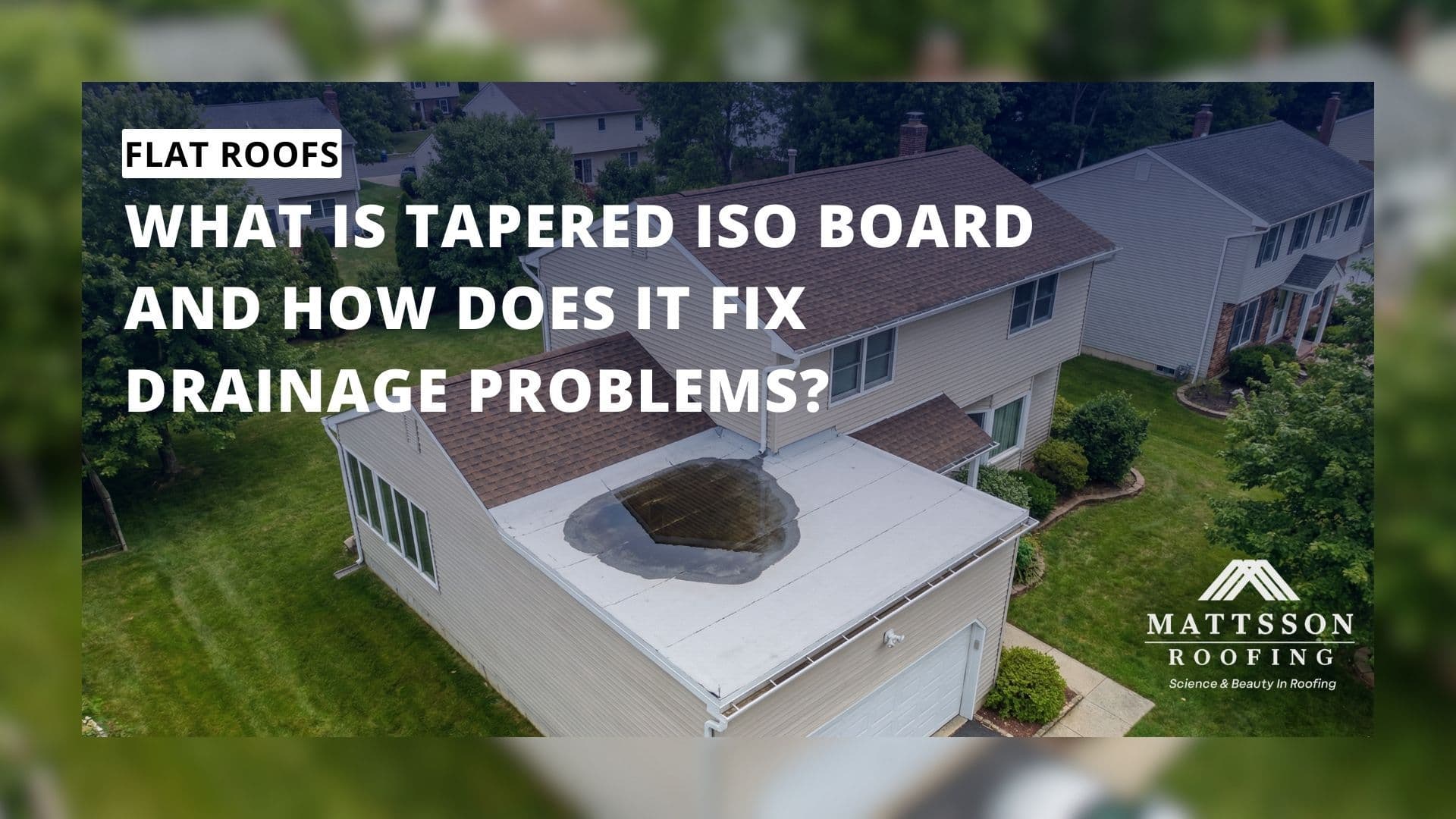
If you've noticed water collecting in certain areas of your flat roof after rain, you're observing what roofing professionals call ponding or standing water. This isn't just a cosmetic issue—it signals that your roof's drainage system isn't working as designed. For homeowners in Bergen County with flat or low-slope roofs, understanding why this happens and how to fix it can prevent thousands of dollars in water damage down the line.
Standing water on a flat roof typically means the roof's pitch—the subtle slope that directs water toward gutters and drains—has either deteriorated over time or was poorly designed from the start. Left unaddressed, these "dead zones" where water collects can accelerate roof membrane breakdown, create leaks, and compromise the structural integrity of the roofing system.
The solution isn't always a complete roof replacement. In many cases, the problem can be solved by redesigning how water moves across the roof surface using a material called tapered ISO board.
What Is Tapered ISO Board and How Does It Fix Drainage Problems?
Tapered ISO board is a specialized roofing material designed to solve flat roof drainage issues without requiring a complete structural overhaul. As explained during a recent Mattsson Roofing project, "It's about a 4 by 4 foot piece of foam that one end of it is higher than the other so you can taper roof surfaces to direct water all around the roof where you want it to go."
Think of tapered ISO board as a precision tool for water management. Each piece is manufactured with a gradual slope—typically ranging from 1/8 inch to 1/2 inch per foot. When installed strategically across a flat roof, these boards create new drainage pathways that redirect water away from problem areas and toward properly functioning gutters or drains.
The "ISO" stands for polyisocyanurate, a closed-cell foam insulation that provides both structural support and thermal performance. This means homeowners get two benefits: improved drainage and enhanced energy efficiency. For homes in Ridgewood, Franklin Lakes, or Upper Saddle River where winter heating costs can be significant, the insulation value is a welcome bonus.
How Does Tapered ISO Board Work to Redirect Water?
The concept behind tapered ISO board is elegantly simple: by strategically layering foam pieces of varying thickness, roofing contractors can essentially redesign the pitch of an existing flat roof without altering the structural framing underneath.
According to Mattsson Roofing's approach, "We're using tapered foam board to direct water into a certain spot on the roof, into the gutters, off of the roof, so it's not getting stuck in these dead zones from this poorly designed roofing system."
Here's how the installation process typically works:
First, a thorough roof inspection identifies where water currently pools and where it needs to flow instead. This requires understanding the existing roof structure, locating all drains and gutters, and mapping out the problem areas.
Next, a tapered ISO board plan is designed—almost like creating a topographical map. The contractor determines which areas need the most elevation change and calculates the slope required to move water efficiently. This might mean creating multiple drainage valleys that all funnel toward a single gutter location, or redesigning the entire roof to drain in a completely different direction than before.
Finally, the tapered boards are installed in a specific sequence, with each piece precisely positioned to create the desired slope. The new roof membrane is then installed over this redesigned surface, creating a watertight system with proper drainage built in.
For homeowners in Ho-Ho-Kus or Saddle River dealing with additions, garages, or sunroom roofs that were never properly sloped, this approach can transform a chronic problem into a permanent solution.
What Are "Dead Zones" on a Flat Roof and Why Are They Harmful?
A dead zone on a flat roof is exactly what it sounds like—an area where water has nowhere to go. These low spots collect rainwater and snowmelt, creating ponds that can sit for days or even weeks after precipitation.
While a truly flat roof might sound problematic, most "flat" roofs are actually designed with a slight pitch—usually at least 1/4 inch per foot—to promote drainage. Dead zones develop when this minimal slope is interrupted by settling, poor initial design, or structural movement over time.
The consequences of dead zones extend beyond the obvious standing water:
Accelerated membrane deterioration: Roofing membranes—whether EPDM rubber, TPO, or modified bitumen—are designed to shed water, not sit submerged. Constant exposure to standing water breaks down the membrane's UV resistance and flexibility, leading to cracks and eventual leaks.
Organic growth: Algae, moss, and even small plants can establish themselves in areas of standing water, further compromising the roof membrane and creating additional drainage obstacles.
Freeze-thaw damage: In New Jersey winters, water that sits in dead zones will freeze and expand, putting stress on seams and penetrations. This cyclical freezing and thawing accelerates wear and creates new leak pathways.
Increased structural load: While one or two inches of standing water might not seem significant, across a large roof area it represents considerable weight—especially when snow accumulation is factored in.
For homeowners in Wyckoff, Ramsey, or Hillsdale where winter weather is a yearly reality, addressing dead zones before they cause interior damage is crucial.
Why Do Flat Roofs Develop Drainage Problems?
Understanding why flat roofs develop drainage issues helps homeowners recognize the problem early and appreciate why solutions like tapered ISO board are sometimes necessary.
Original design flaws: Some flat roofs are installed without adequate pitch from the beginning. This is especially common with additions, garages, or enclosed porches where the roof was designed primarily for budget rather than long-term performance.
Structural settling: Over decades, buildings settle and shift slightly. What was once a properly sloped roof can develop low spots as the structure finds its equilibrium. This is particularly common in homes built on varying soil conditions throughout Bergen County.
Inadequate internal drainage: Some flat roofs rely on internal drains rather than perimeter gutters. If these drains weren't positioned correctly during construction—or if the roof wasn't properly sloped toward them—water has no efficient path to exit the roof.
Accumulation effects: Small imperfections in drainage can compound over time. A minor low spot collects sediment and organic debris, which creates a deeper depression, which collects more water, creating a self-reinforcing problem.
HVAC and equipment installation: When air conditioning units, exhaust vents, or other rooftop equipment are added after initial construction, they can disrupt existing drainage patterns if not properly integrated into the roof's pitch design.
The good news is that these issues don't necessarily require tearing off the entire roof. Tapered ISO board provides a way to "reset" the roof's drainage design while keeping the existing structure intact.
When Should Homeowners Consider Tapered ISO Board?
Not every flat roof needs tapered ISO board, but several scenarios make it the ideal solution:
Persistent ponding water: If you consistently see standing water 48 hours or more after rainfall, your roof has a drainage problem that needs addressing. Waiting for the next roof replacement isn't a solution—the damage is happening now.
Planned roof replacement with known drainage issues: If your flat roof needs replacing and you've experienced drainage problems, incorporating tapered ISO board into the new roof system prevents the same issues from recurring.
Interior leaks without obvious roof damage: Sometimes leaks occur not because the membrane itself has failed, but because water is being directed toward vulnerable areas like seams, penetrations, or parapet walls. Redirecting drainage can solve the leak without replacing the membrane.
Energy efficiency upgrades: Since tapered ISO board also provides insulation, homeowners looking to improve their home's thermal performance can address both drainage and energy efficiency in a single project.
Addition or structural changes: When building an addition or making structural modifications that affect the roof, incorporating proper drainage design from the start prevents future problems.
According to Mattsson Roofing's project philosophy, tapered ISO board "allows you to think about the design of your roof, where you're pushing water to now, and then where you want it to go to when you're done working on the roof."
For homeowners in Woodcliff Lake, Oradell, or Teaneck evaluating whether their flat roof needs attention, a professional inspection can determine if tapered ISO board offers the right balance of solution and investment.
How Can I Schedule a Roofing Inspection?
For homeowners in Bergen County and surrounding areas looking for peace of mind with their roof, Mattsson Roofing is here to help. Our inspections focus on understanding the entire roofing system—not just spotting surface issues.
During a flat roof inspection, we assess drainage patterns, identify dead zones, examine membrane condition, and evaluate whether tapered ISO board or other solutions would benefit your home. The goal is always to provide you with clear information about your roof's current state and the most effective path forward.
Contact Us
Mon-Fri: 7:30am - 5pm
Sat: Appointment Only
Sun: Closed